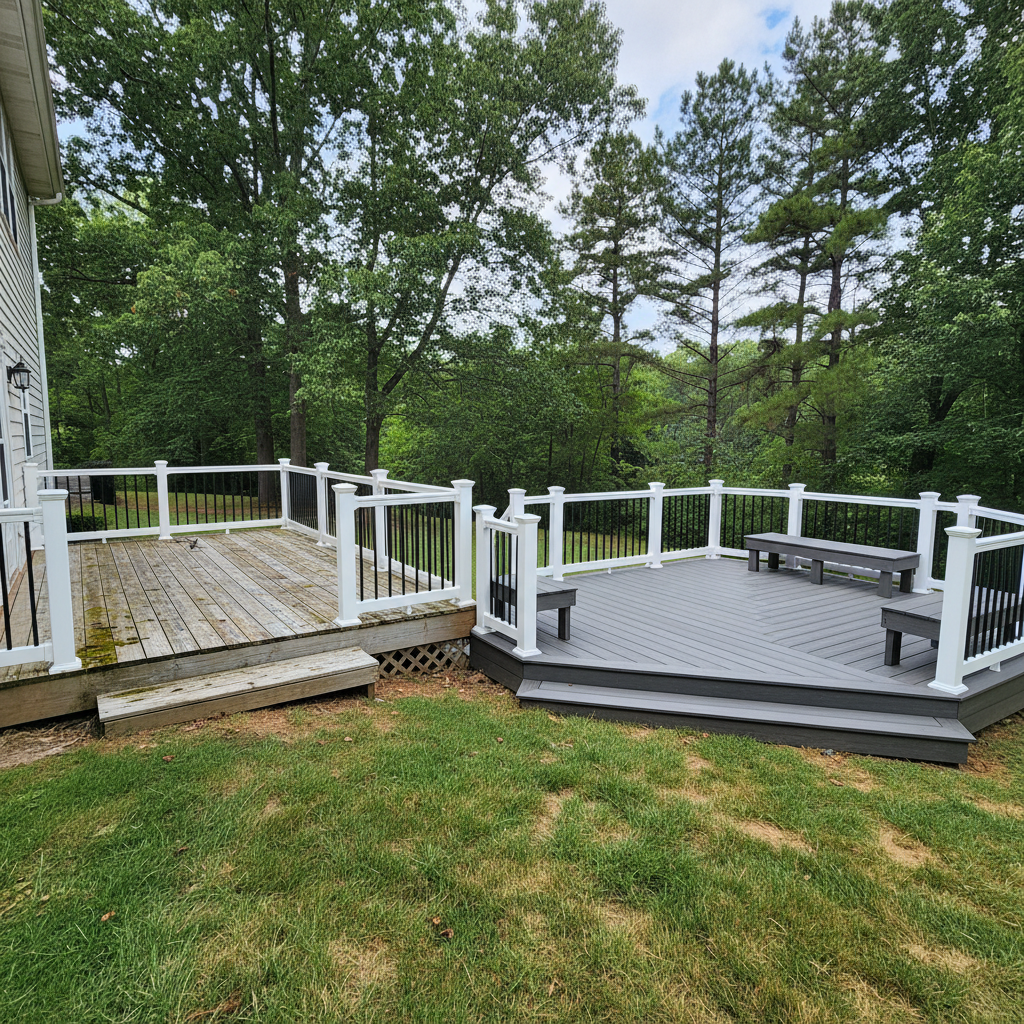
You've decided on composite decking – smart move, especially with our humid Dumfries summers and that pesky pollen. Now comes another choice: how do you actually attach those boards to the joists? You've got two main routes: hidden fasteners or good old face screws. Let's talk about what each means for your deck, your wallet, and your weekend.
Hidden Fasteners: The Clean Look
Hidden fasteners are exactly what they sound like. They're clips or brackets that fit into grooves on the side of your composite deck boards, securing them to the joists from the side. You don't see any screws on the surface of the deck. Most quality composite boards, like Trex or TimberTech, come with a grooved edge option specifically for these.
The Good Stuff:
- Appearance: This is the big one. Your deck surface looks smooth, uninterrupted, and really clean. It gives a premium, finished look that a lot of folks love.
- Foot Comfort: No screw heads means no snagging bare feet or stubbing toes. It's just a flat, comfortable surface.
- Board Expansion: Many hidden fastener systems allow for slight movement in the boards as they expand and contract with temperature changes. This can be a real plus in our climate where we see big swings from cold winters to hot, muggy summers. It helps prevent buckling or warping over time.
- Easier Cleaning: With no screw heads to trap dirt or debris, cleaning your deck can be a bit simpler.
The Not-So-Good Stuff:
- Cost: Hidden fasteners themselves are more expensive than a box of deck screws. Plus, the installation often takes a little longer, which can add to labor costs.
- Installation Complexity: It's a more precise job. If a board needs to be replaced in the middle of the deck, it can be a real headache, sometimes requiring you to unfasten several boards.
- Less Secure (Sometimes): While good systems are very strong, a single hidden fastener might not hold a board down with the same individual force as a face screw. If you've got a specific area that gets heavy, concentrated impact, it's something to consider.
Face Screws: The Traditional Approach
Face screwing means you drill a screw right through the top surface of the composite board, down into the joist below. It's the way decks have been built for ages, just with specialized screws for composite now.
The Good Stuff:
- Cost: Generally, this is the more budget-friendly option upfront. The screws are cheaper, and installation can be quicker.
- Security: Each board is individually fastened directly to the joist. This provides a very strong, secure connection. If you're building a deck that might see a lot of heavy traffic or even a hot tub, this can be reassuring.
- Easier Replacement: If a board gets damaged, you just unscrew it and screw in a new one. Much simpler than dealing with hidden clips.
- DIY-Friendly: For the ambitious DIYer, face screwing is a more straightforward process.
The Not-So-Good Stuff:
- Appearance: You'll see all those screw heads. Even with color-matched screws, they're visible. Some people don't mind it; others find it distracting.
- Potential for "Mushrooming": With composite, if you don't use the right screws or don't pre-drill properly, the screw can push up a little "mushroom cap" of material around the head. Good composite screws are designed to prevent this, but it's still a risk if not done right.
- Foot Comfort: While not usually a major issue, those screw heads are there.
- Water Trapping: The tiny indentations around screw heads can sometimes trap water, dirt, or pollen, making cleaning a bit more involved.
My Recommendation for Dumfries Homeowners
Look, both methods work. But if you're asking me, for most folks around here, I lean towards hidden fasteners for composite decks. Here's why:
Our local conditions – the humidity, the temperature swings, the heavy pollen in spring – really highlight the benefits of hidden fasteners. The expansion and contraction allowance helps keep your deck looking good longer, resisting potential warping. And let's be honest, that clean, seamless look just elevates your outdoor living space. When you're investing in quality composite, you want the final product to look as good as possible, and hidden fasteners deliver on that.
Yes, it's a bit more expensive upfront, but I find that the long-term aesthetic appeal, the ease of cleaning, and the peace of mind knowing your boards can breathe a little are worth it. When Charis Deck Solutions builds a composite deck, we often recommend and install hidden fasteners because we've seen how well they hold up and how happy our clients are with the finished look.
Now, if you're on a super tight budget or you're building a utility deck where aesthetics aren't the top priority, face screws are a perfectly viable option. Just make sure you're using high-quality, composite-specific screws and taking the time to install them correctly to avoid mushrooming.
Ultimately, it comes down to what you prioritize: a slightly lower upfront cost with a more traditional look, or a premium, seamless finish with a bit more investment. Either way, you're getting a durable, low-maintenance deck that'll serve you well for years.