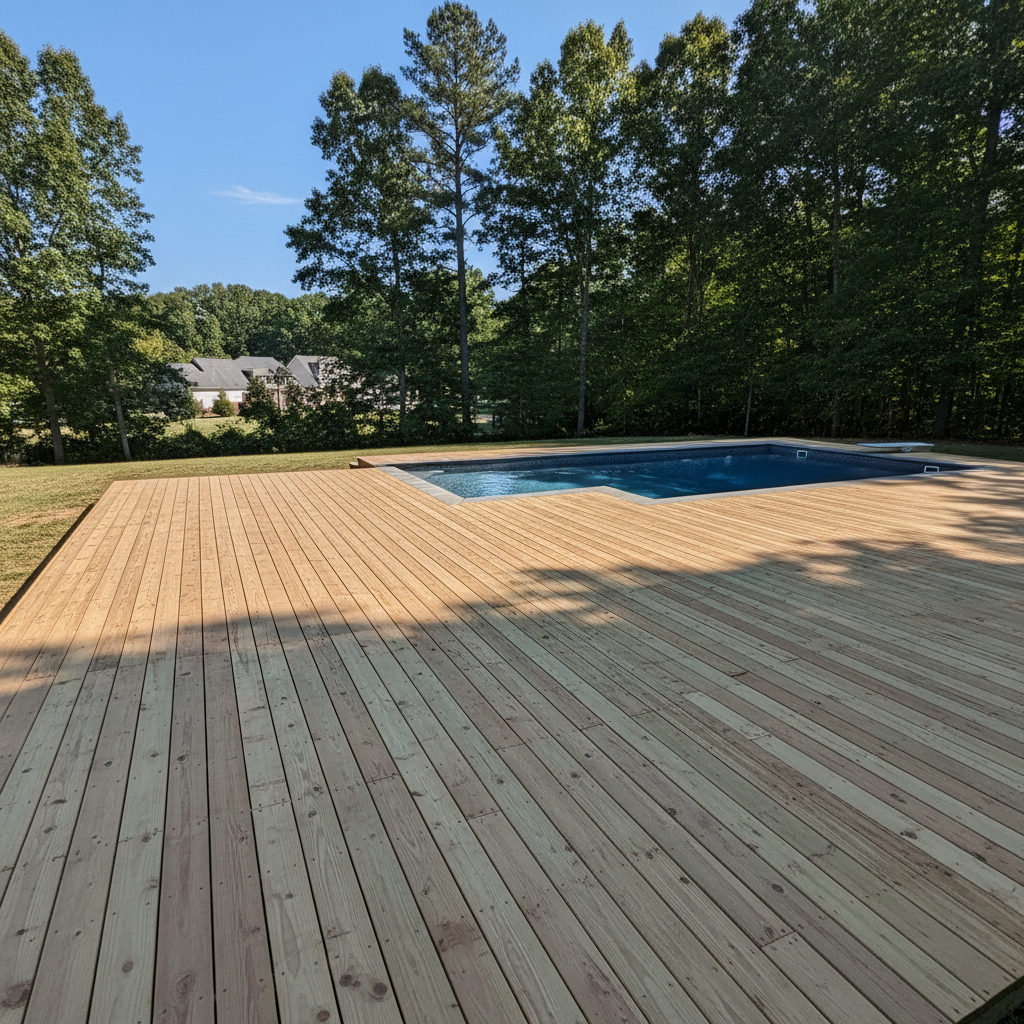
You've got a pool deck, right? That means you've invested in your home and your family's fun. But that investment needs looking after, especially here in Dumfries where our summers are humid and our winters can be brutal. I've seen too many good decks go bad because folks didn't know what to look for or what to do. Let's talk about keeping your pool deck in top shape.
Regular Upkeep: Your Deck's Best Friend
Think of your pool deck like your car – it needs regular check-ups. For most decks, especially wood or composite ones around a pool, cleaning is your number one task. You're dealing with chlorine, sunscreen, spilled drinks, and all sorts of gunk. I recommend a good scrub down at least twice a year, maybe more if you're using the pool a lot.
- Sweep it clean: Get rid of leaves, dirt, and debris regularly. This stops organic matter from breaking down and staining the surface, or even worse, holding moisture against the deck boards.
- Wash it down: A simple garden hose and a soft-bristle brush often do the trick for light cleaning. For tougher stains, a mild detergent (like dish soap) mixed with water works wonders. Always rinse thoroughly, of course.
- Pressure washing (use caution): You can use a pressure washer, but be careful. Too much pressure, especially on wood, can damage the fibers, leaving unsightly marks or even splintering the surface. Keep the nozzle moving and use a wide fan tip. For composite, check the manufacturer's recommendations – some can handle it, some can't. You definitely don't want to blast off the protective cap layer.
- Check your drainage: Make sure water is shedding off the deck properly. If you've got standing puddles, that's a problem. It'll accelerate rot in wood and can lead to mold and mildew on any surface.
Making Your Deck Last Longer in Our Climate
Our Virginia climate is tough on outdoor structures. We get those hot, humid summers that are perfect for mold and mildew, followed by freezing winters that can cause expansion and contraction issues. Here's how to fight back:
- Sealing and Staining (for wood decks): This is crucial. For wood decks, you should be re-sealing or re-staining every 1-3 years, depending on the product and how much sun exposure your deck gets. A good sealant protects against moisture, UV rays, and helps prevent rot and splintering. Don't skip this. It's the best defense against our humid summers and the constant splash of pool water.
- Mind the gaps: Make sure the gaps between your deck boards are clear. This allows for proper ventilation and drainage. If they're packed with debris, water sits there, and that's a recipe for trouble.
- Trim back foliage: Overhanging branches or bushes too close to the deck keep it damp and promote mold growth. Give your deck some breathing room.
- Protect from pool chemicals: Try to minimize direct contact of concentrated pool chemicals with your deck surface. Spills should be rinsed immediately.
Warning Signs You Shouldn't Ignore
Your deck will tell you when it's hurting, if you know what to look for. Don't wait until it's a major repair.
- Soft spots or spongy areas: If you walk across your deck and feel a soft spot, especially on a wood deck, that's a huge red flag for rot. Don't ignore it.
- Cracks or splintering: Small cracks are normal, but large, deep cracks or excessive splintering mean the wood is drying out or deteriorating.
- Loose railings or wobbly posts: This is a safety issue. Railings should be rock solid. If they're not, something's wrong with the fasteners or the post attachment.
- Excessive mold or mildew: While some is normal, if it's widespread and hard to clean, it could indicate a deeper moisture problem or that your sealant has failed.
- Fading or discoloration: For composite decks, excessive fading or uneven discoloration might mean the protective cap layer is compromised. For wood, it means your stain or sealant is wearing thin.
- Fastener issues: Are screws popping up? Are nails lifting? This can be due to wood movement or improper installation. It's a tripping hazard and can lead to bigger problems.
When to Call a Professional (Like Charis Deck Solutions)
Look, some things you can handle yourself. Cleaning, light sealing, sure. But there are times when you really need to bring in someone who knows what they're doing. If you see any of those serious warning signs – soft spots, major structural issues, widespread rot – don't try to DIY a fix. You could make it worse, or worse, create a dangerous situation.
If your deck is more than 15-20 years old, it might be time for a professional inspection. Even if it looks okay, the underlying structure could be compromised, especially with our clay soils here in Dumfries that can shift and affect footings over time. If you're unsure about the extent of damage, or if you're just not comfortable tackling a big repair, give us a call. We're here to help keep your pool deck safe and looking good for years to come.