What are the best railing materials for our Dumfries weather?
Around here, with our hot, humid summers and sometimes icy winters, picking the right material is super important. I've honestly seen everything: railings that look fantastic for years, and others that start showing their age way too fast. For something durable and low-maintenance, composite and aluminum are really hard to beat. Composite railings, especially the capped kinds, won't fade, rot, or get eaten by bugs. They don't splinter either, and you definitely won't be painting them every few years. Aluminum is another great choice; it's strong, light, and won't rust. It works perfectly for those sleek, modern designs. Wood, especially pressure-treated lumber or cedar, is still popular because it has that classic look and costs less upfront. But, be warned, you'll be staining or painting it regularly, and it's more likely to warp or crack if you don't take care of it. Vinyl is out there too, but I've found it can get brittle over time with our wild temperature swings, and frankly, the look isn't for everyone. Ultimately, it really comes down to your budget, the style you're going for, and how much time you're willing to put into keeping it up.
Do I need a permit to replace my deck railings?
This question comes up a lot, and the answer is usually yes. That's especially true if you're swapping out the whole railing system or making big structural changes. Prince William County has specific building codes, and railings are a key safety part of your deck. They have to meet certain height requirements, baluster spacing rules, and load-bearing standards. You really don't want to skip this step. If you replace railings without a permit and something goes wrong – or you try to sell your house later – it can turn into a real headache. It's always best to check with the county's building department. Or, if you're working with a contractor like Charis Deck Solutions, we'll handle the permit process for you. It's not just about avoiding fines; it's about making sure your deck is truly safe for your family and friends.
How high do my deck railings need to be?
For most homes in Dumfries, if your deck surface sits more than 30 inches off the ground, your railings need to be at least 36 inches high. We measure that from the deck surface right up to the top of the rail. Now, if you've got a walkout basement or a deck that's really high up, sometimes the code actually calls for 42 inches. It's all about keeping people from falling, right? Balusters, those vertical pickets, also have a specific spacing rule: a 4-inch sphere shouldn't be able to pass through them. This prevents small children or even pets from slipping through. These aren't just suggestions; they're code requirements for a very good reason.
Can I mix and match different railing materials?
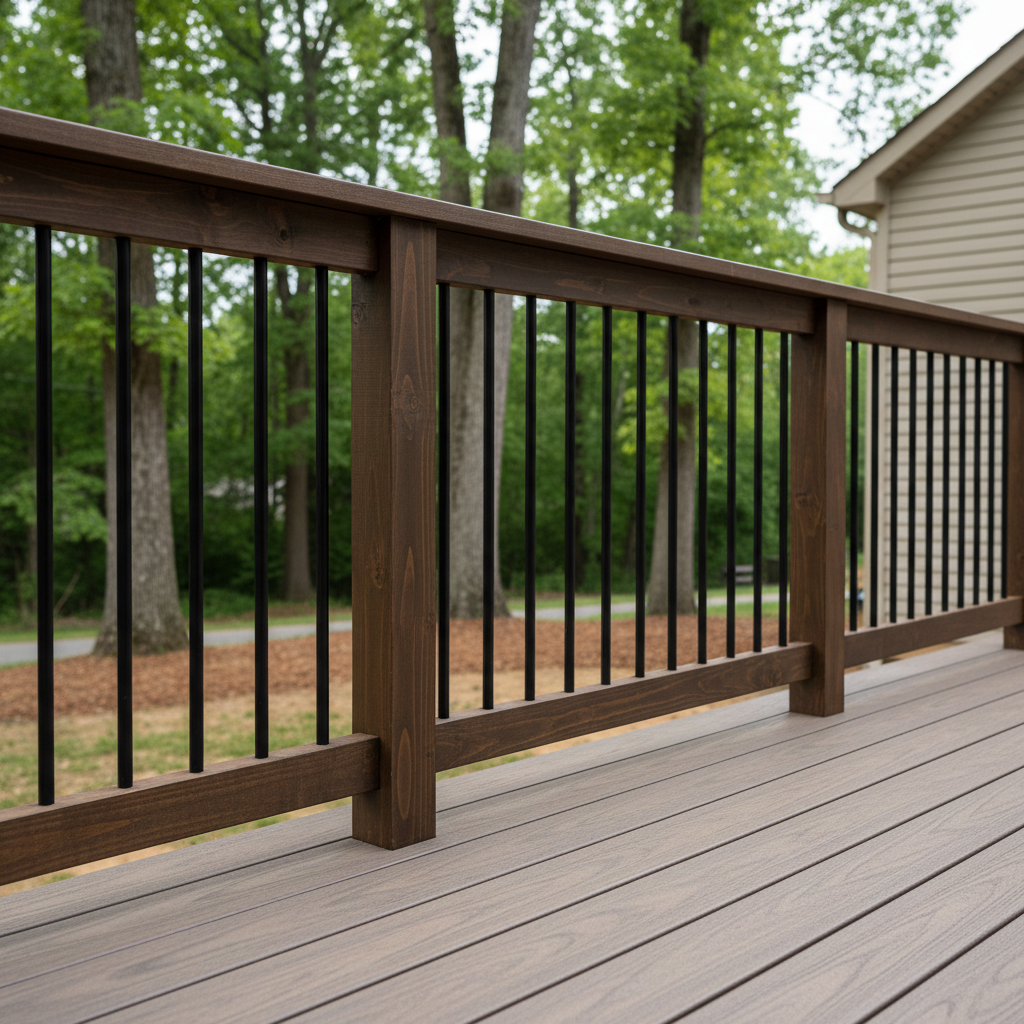
Absolutely! And honestly, it's a fantastic way to give your deck some custom flair. I've done tons of projects where we've put composite top rails with aluminum balusters, or even wood posts with cable infill. The main thing is making sure the different pieces work together, and that the whole system is solid and meets code. For instance, maybe you love how a wide composite top rail holds your drinks, but you also want sleek black aluminum balusters so you get an unobstructed view of the Occoquan River. Or perhaps you want classic wood posts but with glass panels for a modern touch. Just make sure the connections are strong and the materials will hold up well together in our local climate. Some combinations might need specific fasteners or installation tricks to really last.
What's the deal with cable railings? Are they durable?
Cable railings have gotten super popular, especially for homes that want a more modern look or to really open up their views. They're basically horizontal stainless steel cables stretched between posts. As for durability, yeah, they're very tough. Stainless steel really resists corrosion, which is a huge plus with our humidity. The main thing to watch out for is getting them tensioned correctly during installation. If the cables aren't tight enough, they can sag or be too flexible, which could be a safety issue. They also need a little re-tensioning every now and then. They're a bit more expensive upfront than traditional balusters, but that sleek look and low maintenance (just occasional cleaning) make them a great choice for many homeowners.
How long does railing installation typically take?
This really depends on how big and complex your deck is, plus the kind of railing system you pick. For a standard 12x16 foot deck with a basic composite or aluminum railing, we're probably looking at one to two days for installation once the deck structure is all set. If you're doing something more intricate, like custom glass panels, cable railings with lots of runs, or a multi-level deck, it could take longer – maybe three to five days. We always try to work efficiently without cutting any corners. Weather, especially those unexpected Dumfries thunderstorms, can also mess with the schedule a bit. When I give you an estimate, I'll give you a clear timeline, and we'll stick to it as best we can.
What kind of maintenance do deck railings need?
How much upkeep your railings need really depends on what they're made of. Wood railings demand the most attention. You'll want to clean them every year and then re-stain or paint them every 2-3 years to protect against rot, UV damage, and moisture. Composite and vinyl railings are much easier to care for. Usually, a simple wash with soap and water a couple of times a year is all they need to get rid of dirt, pollen, and mildew. Aluminum and cable railings are similar; just clean them to keep them looking good. For cable railings, you might need to check the tension every year or two and adjust it if necessary. No matter the material, always give your railings an annual once-over for any loose fasteners, wobbles, or signs of damage. It's a small effort that can prevent bigger problems down the road and, most importantly, keep your deck safe.